
For many people, the word networking still conjures up images of awkward small talk, forced smiles, and the familiar question, “So, what do you do?” followed by a quick scan of the room for someone more ‘relevant’ to speak to. It’s hardly surprising then that the term can feel off-putting.
In reality, the connections that lead somewhere meaningful rarely happen in environments labelled as networking events. More often, they emerge in everyday moments, such as a conversation while preparing a hot drink, a regular exchange with familiar faces in shared spaces, or a discussion that begins after an event and continues informally over time. These interactions tend to feel more natural and less transactional. Trust and familiarity develop gradually through repeated contact over time rather than formal introductions or structured agendas.
This distinction is particularly relevant at a time when discussions around exclusivity in traditional professional circles continue to surface. Questions are still being raised about access, opportunity, and the persistence of ‘Old Boys’ Clubs’ within certain industries.
Coworking environments offer a different dynamic. They bring together people from a range of backgrounds and disciplines in shared, everyday settings, creating conditions in which professional relationships can form more openly and organically.
Coworking Breaks the Old Rules
There has been ongoing discussion in recent years about the influence of exclusive professional networks within parts of UK business culture, particularly in finance and corporate environments, where access to opportunity is still often shaped by established relationships and informal circles rather than merit alone. The financial services sector is frequently described as an old boys’ network, with reports highlighting continued exclusion from informal decision-making spaces even where diversity and inclusion initiatives are in place. This suggests that barriers are less about formal policy and more about access to the right conversations and environments.
This dynamic is reflected in the long-standing reputation of London’s private members’ clubs in areas such as Mayfair and St James’s, where entry has traditionally depended on social connections and status. While some modern clubs have broadened membership, selective access remains a defining feature.
Coworking spaces operate on a different model. Membership carries no social prerequisite: people from a wide range of creative disciplines and career stages share the same environment and interact on equal footing. This is particularly relevant in the creative sector, where access to opportunity can still be uneven, and can often depend on who you know.
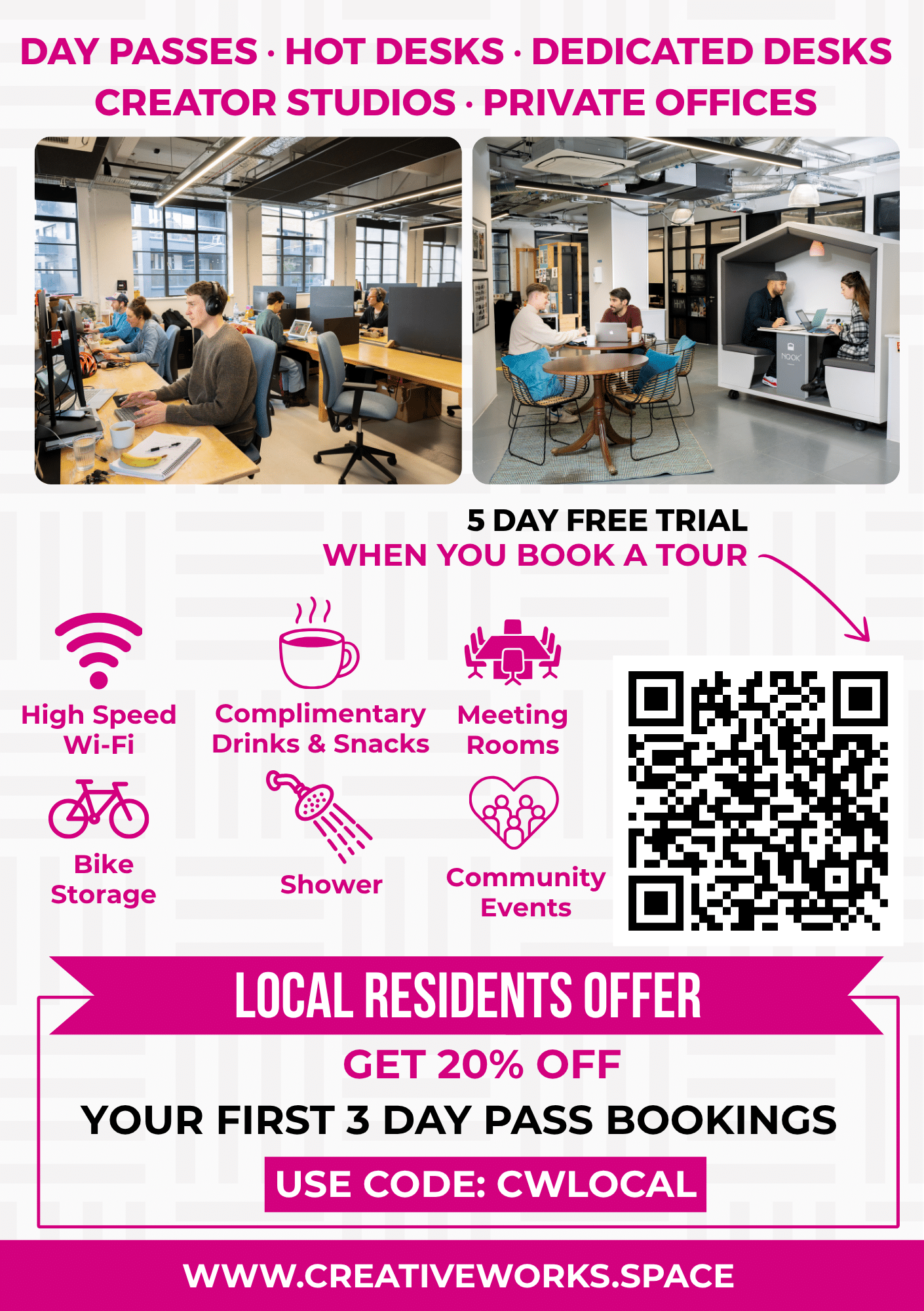
At Creative Works, designers, writers, photographers, producers, and other creative professionals work in a shared environment that enables direct conversation and collaboration. This reduces hierarchy and encourages interaction between people who might not otherwise meet.
Community First, Opportunities Follow
At Creative Works, community plays a central role in how connections and opportunities develop across the membership. This is reflected in growing engagement with our weekly Write Club, which brings together individuals who might otherwise spend most of their week working alone. While not positioned as a formal networking event, it provides a consistent setting where connections form through shared discussion, feedback and peer support. It also offers a simple reason for members to sit alongside people they may not otherwise meet through work alone.
In August, our regular Sound Healing session will offer a different type of shared experience. It is not focused on professional interaction, but it contributes to stronger relationships within the community by creating space outside of work routines where people can spend time together in a low-pressure setting.
Upcoming Creative Works lunchtime talks will continue to provide structured opportunities for members to hear from others and exchange ideas. These sessions help maintain regular conversation across the community and support longer-term professional relationships.
At Creative Works, nothing is positioned specifically as networking. There is no expectation to perform or present yourself in a particular way. As a result, conversations tend to be more natural, and the connections formed are often more genuine.
For anyone who dislikes traditional networking, the approach here is simple: keep showing up, take part in the community, and speak to the people around you.