
For thousands of freelancers across the UK, creative work offers something special: the freedom to build a career around your skills, interests and ambitions. But that freedom can come with uncertainty. Irregular income, short-term contracts, limited access to development opportunities and concerns about fair treatment are familiar realities for many self-employed workers.
That’s why this week’s Government announcement could prove significant for the UK’s freelance creative community. Two experienced freelancers, Leila D’Aronville and Lizzie Crump, have been appointed as the first ever Freelance Champions for the creative industries. Their role is to ensure freelancers’ experiences and concerns are heard when decisions about the sector are made.
With 703,000 self-employed people working in the UK’s creative industries alone, this is more than a symbolic appointment. It is recognition that freelancers are central to the success of Britain’s creative economy.
A Stronger Voice for Britain’s Freelancers
Freelancers make up a remarkable part of the UK’s creative workforce. In 2025, 28.5% of the 2.6 million people working in the creative industries were self-employed, almost twice the rate across the wider economy. However, being an essential part of an industry does not always mean having decision-making powers or influence.
That is precisely what the new Freelance Champions are intended to change. D’Aronville and Crump bring a combined 40 years of experience as freelancers and advocates for the creative industries. D’Aronville founded North East Cultural Freelancers, supporting freelancers and small creative organisations across the region, while Crump is Co-Director of What Next?, the UK’s largest free-to-access network for arts and culture, with platforms across the country, including an East London chapter.
D’Aronville and Crump will work with Government, industry organisations and freelancers themselves to ensure that policies reflect the realities of freelance working. They will also sit on the Creative Industries Council (CIC), giving freelancers a direct presence within a key industry and Government forum. The CIC is a joint forum between the UK Government and the creative industries. Its purpose is to bring senior people from across the creative sector together with ministers and policymakers to discuss what the industry needs and help shape action.
For those of us working independently, this truly matters. Collectively, freelancers represent a significant and influential part of the British economy, and this new role gives our community a stronger voice and a seat at the table when decisions about our future are being made.
Creating Better Conditions for Freelancers
The announcement is especially relevant because it comes alongside concerns raised by the Good Work Review, the first assessment of job quality across the UK’s creative industries. Drawing on evidence from 120 organisations and 40 indicators, it examines issues such as fair pay, flexible working, paid overtime and employee representation.
The review identified several challenges facing creative workers, including unpaid work, poor job quality, difficult working environments and limited opportunities for professional development.
These challenges directly impact freelancers’ working lives. Unpaid pitches take up time that could otherwise be spent on paid work, cancelled contracts can create financial uncertainty, and limited access to affordable training can hinder skills development and career progression.
At the same time, the Review recognises the benefits of freelance work, including flexibility, autonomy and high levels of job satisfaction.
Improving working conditions for freelancers could also have wider benefits beyond the creative industries. As portfolio careers, micro-businesses and self-employment become more common, the changes being considered now could help shape the future of work more broadly.
Why This Matters in a Coworking Community
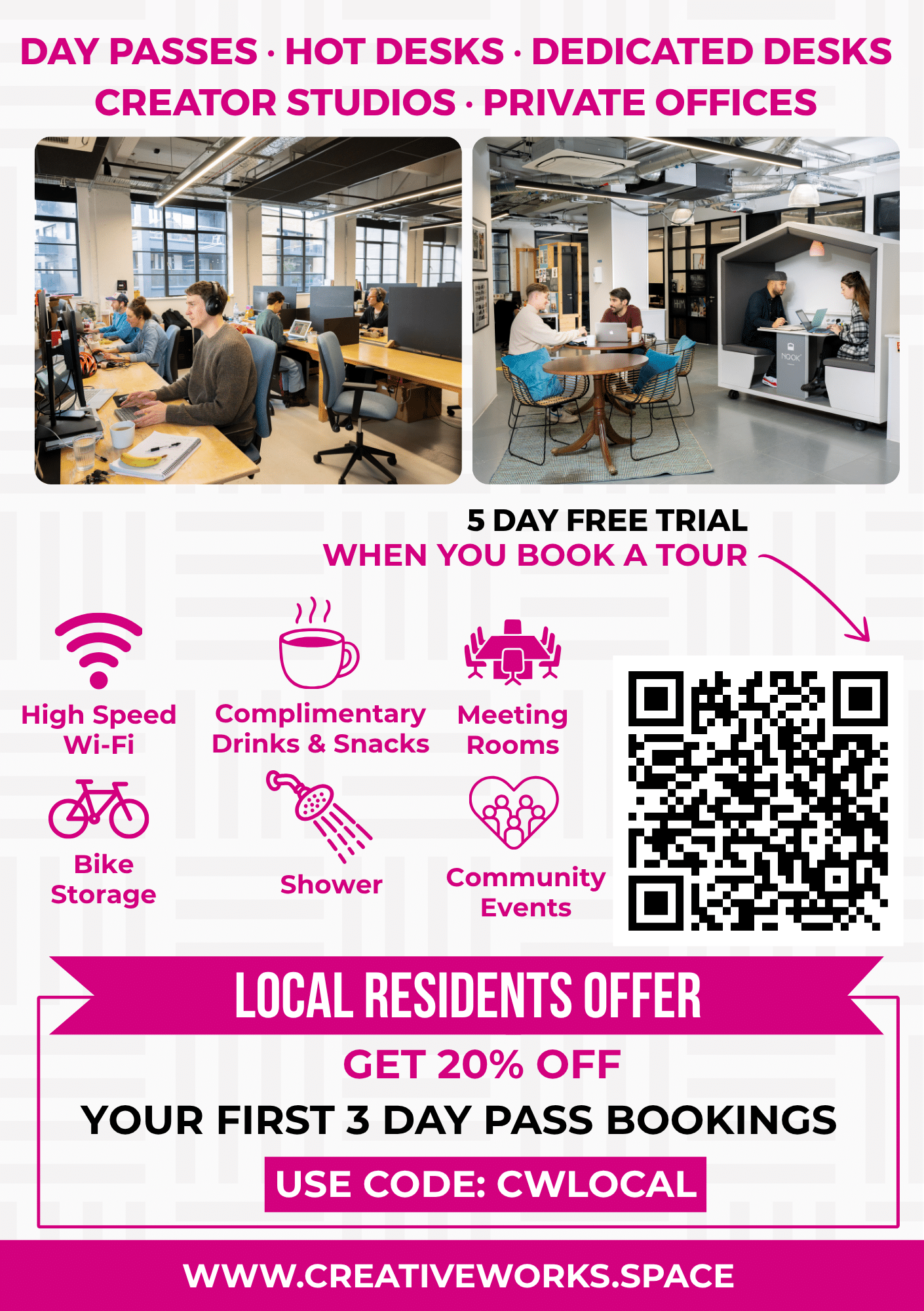
The announcement also highlights the importance of community for freelancers. Coworking spaces such as Creative Works bring together independent workers from different sectors, providing them with opportunities to share experiences, build networks, and have a stronger collective voice.
The appointment of D’Aronville and Crump reminds us that freelancers do not have to remain on the margins of policy conversations. Their experiences can influence the systems around them (but only if those experiences are heard and acknowledged).

Photo Source: LinkedIn / cairnscrump.com
The Government has also committed £380 million through its Creative Industries Sector Plan, launched in 2025, with ambitions to make the UK the world’s leading destination for creative investment by 2035.
For freelancers, the hope is that investment in the creative industries will translate into something tangible: better opportunities, sustainable careers and an environment where talented people can thrive without constantly battling insecurity.
The Freelance Champions are now inviting freelancers and the wider industry to share their experiences and views. For those of us working independently, this is an opportunity to make sure our voices are heard.
The full Government announcement was published by the Department for Digital, Culture, Media and Sport and The Rt Hon Lisa Nandy MP on 1 September 2026. Read it in full here.