
Opportunity has always been the promise of city life, but equal and fair access to it has never been guaranteed. For many people, whether due to background, income, caring responsibilities, disability, or identity, the traditional workplace can feel out of reach or even unwelcoming. Long commutes, rigid office cultures, and a lack of inclusive design can exclude those who do not fit the stereotypical image of a ‘city worker.’
Coworking can provide vital access and a sense of community for those who feel excluded from traditional offices. Across the UK, coworking spaces help reduce barriers and create environments where people can find a sense of belonging, rebuild confidence, and develop professionally. This can be especially important for those starting over, changing direction, or simply looking for somewhere they can be themselves.
Coworking Offers a Welcoming Alternative to the City
Not everyone experiences the city in the same way. For some, it can feel overwhelming or even unsafe. Whether it’s a lack of accessible facilities, cultural barriers, or environments that do not reflect their identity, many people find themselves excluded from traditional workplaces without it being openly acknowledged.
Coworking spaces can offer an alternative. When thoughtfully designed and intentionally managed, they become places where people feel at ease rather than on edge. This might mean accessible amenities, quiet areas for those who need calm, or simply a culture in which difference is respected (and appreciated) rather than questioned. It can also mean hosting events or creating networks that reflect the local community.
Essentially, it’s about more than physical design: it’s about the atmosphere. A welcoming reception, a familiar face, or a sense that you will not be judged for how you work or who you are can make all the difference. For someone who has felt excluded elsewhere, that sense of ease is not a luxury but a necessity.
Supporting Career Change at Every Stage of Life
A career change can be challenging. For instance, parents returning to work, people moving between sectors, and those rebuilding after redundancy face both practical and emotional barriers. Traditional offices do not always support these transitions well, particularly where flexibility is limited.
Coworking spaces can offer structure for people going through change without the rigidity of more formal workplaces, allowing work to fit around life rather than compete with it. For parents, that might mean working close to home or within school hours. For career changers, it means a professional environment in which to rebuild confidence, develop new skills, and recover a sense of direction.
There is also value in visibility. Being surrounded by people who are freelancing, building businesses, or starting over can be quietly reassuring. It helps normalise change, showing that it is not an exception but a common part of working life. In this environment, informal conversations can also lead to advice, collaboration, or timely encouragement when it is needed.
Community as a Pathway to Opportunity
Access is not just about physical space; it’s about opportunity. Who you meet, what you learn, and the doors that open as a result can all shape your working life. For those without established networks or conventional routes into an industry, coworking communities can provide something that has historically been unevenly distributed: a genuine point of entry.
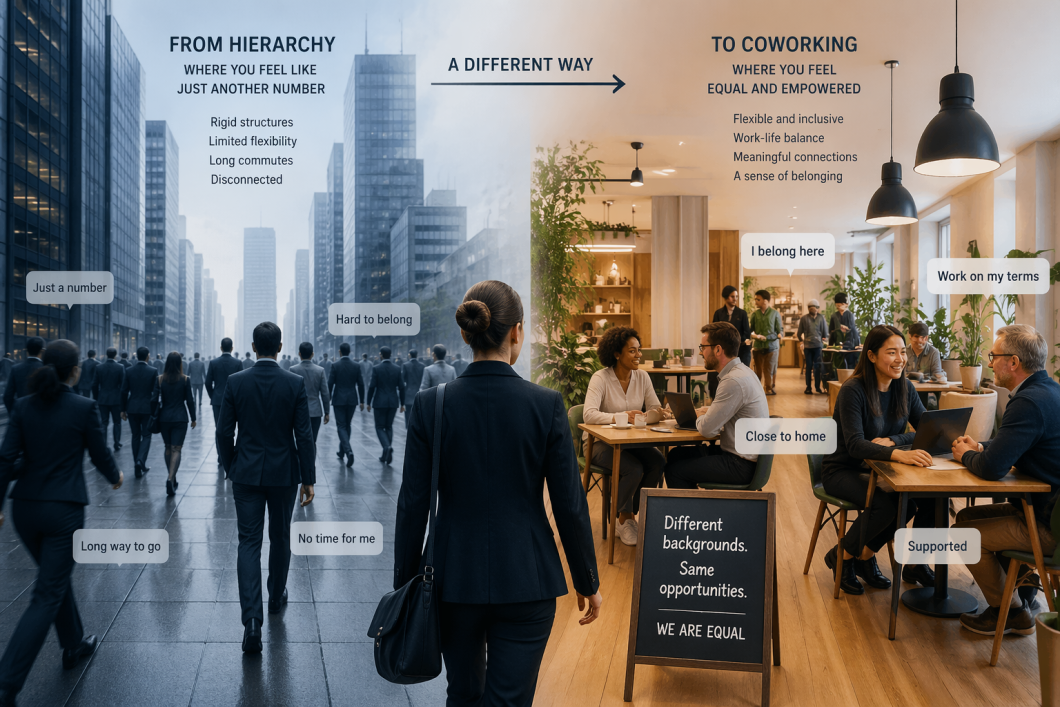
Well-run spaces bring people together across sectors, backgrounds, and levels of experience. Hierarchy tends to dissolve in coworking environments; a CEO and someone at the start of their career may share the same table, each with something to offer the other. That mix can spark ideas, introductions, and opportunities that more structured professional settings often do not. Someone may arrive looking for a desk and leave with a collaborator, a client, or an entirely new direction.
These opportunities do not need to be formal to be consequential. A conversation over coffee, a casual introduction, or a well-timed workshop can alter the course of someone’s career. When coworking spaces are intentional about who they welcome and how they operate, they become more than places to work; they can become access points to possibility.
 Why It Matters
Coworking spaces are not a solution to systemic inequality, but they are a meaningful part of addressing it. When designed with purpose and guided by the right values, they offer clear advantages: they provide environments where people feel comfortable, supported, and connected. In doing so, they help bridge gaps that cities and traditional workplaces often leave unaddressed.
For members, this goes beyond convenience. It offers access, a sense of belonging, and a genuine opportunity to move forward on their own terms.