
Coworking spaces can be ideal for introverts. They offer the flexibility to balance focused work with optional social interaction. Introverts often thrive when they can control their surroundings and set their own pace. Quiet zones or part-time attendance enable them to recharge without social fatigue. Rather than overwhelming networking events, coworking encourages low-pressure connections such as brief chats over coffee or introductions facilitated by community managers. These small, intentional interactions can help introverts build professional relationships gradually and authentically. By tailoring their engagement, introverts enjoy community, collaboration, and networking while still preserving the solitude and focus they need to work effectively.
Engage on Your Own Terms
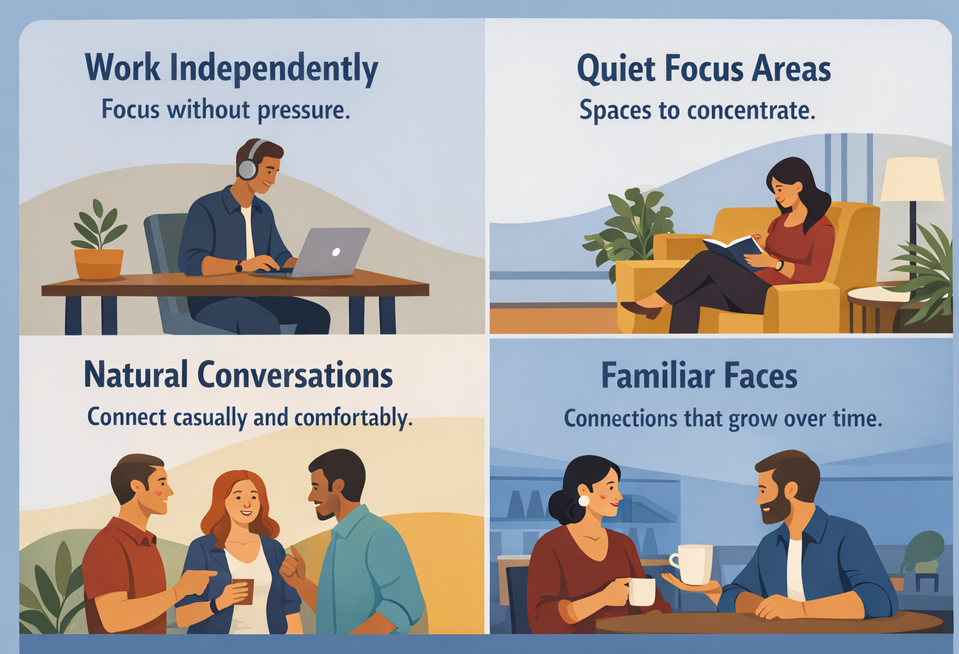
One of coworking’s greatest advantages is the freedom to decide how and when to interact with other members. Unlike traditional offices, there are no expectations to constantly socialise, allowing members to structure their day around energy levels and priorities. Introverts can engage in conversation when it feels natural and step back when they need quiet time. Setting small, achievable goals, such as initiating one conversation a day or attending occasional community events, can build confidence without creating pressure.
Connection in coworking often develops gradually rather than immediately. Simple, repeated interactions—such as greeting familiar faces or sharing brief comments—cultivate familiarity and ease. Over time, these micro-interactions can grow into meaningful relationships, removing the stress and artificiality of formal networking.
Micronetworking Made Comfortable
Coworking spaces provide fertile ground for meaningful professional relationships through a concept known as micronetworking. Unlike traditional networking, which can feel forced or high-pressure, micronetworking relies on small, genuine interactions that happen naturally throughout the day. Asking a quick question while grabbing coffee, having a brief chat in the lounge, or exchanging words at a community event can all develop rapport over time.
This approach aligns with the collaborative nature of coworking. Members can choose their level of engagement, making it comfortable for both extroverts and introverts. Subtle cues such as body language or reaching out via a member platform before meeting in person can strengthen these connections. Community managers often facilitate introductions, turning quick, casual interactions into meaningful opportunities. By embracing micronetworking, introverts can cultivate an organic network that supports peer learning, referrals, and business collaborations—focusing on quality over quantity.
Contribute Quietly, Build a Routine
Coworking does not require constant visibility or vocal presence. Introverts contribute through careful observation, thoughtful communication, and practical support, adding value without leaving their comfort zone. Offering input when relevant, sharing knowledge, or supporting others in small ways allows introverts to engage meaningfully while remaining within their comfort zone.
Creating a predictable routine further enhances the experience. Arriving at consistent times, choosing a preferred workspace, and taking breaks during quieter periods make coworking more manageable and reduce uncertainty. By combining selective engagement, gradual familiarity, and purposeful contribution, introverts can thrive without compromising their natural work style.
Finding the Right Balance
Many coworking spaces provide a variety of work settings, from communal areas to quiet zones. Positioning yourself strategically, using visual cues such as headphones, or choosing specific times for focused work, helps maintain productivity while remaining part of the community. Coworking does not require changing your work style—it allows you to refine it within a shared environment.
The goal is not to become more extroverted but to work alongside others in a way that feels comfortable, sustainable, and effective. Coworking bridges the gap between solitude and community, offering structure and energy without demanding constant interaction. The result is a space where people can focus, feel at ease, and build connections at their own pace—a balance that is not just beneficial but essential for thriving in today’s busy world.
In coworking spaces, introverts do not have to compromise who they are. With clear boundaries, intentional engagement, and routines that support focus, they can work, connect, and thrive on their own terms.